



Find your product now in our new webshop!
You can now access detailed product information and data sheets in our new eStore.

Maximator offers medium, high and ultra-high-pressure valves, fittings and tubing for demanding gas and liquid applications. Our medium pressure components are rated up to 22,500 psi for applications commonly specified in the 20,000 psi pressure class, while our high pressure components are rated up to 65,000 psi for applications commonly specified at 60,000 psi. Ultra-high pressure valves are available up to 101,000 psi for applications commonly specified around 100,000 psi, with ultra-high pressure fittings and tubing available up to 152,000 psi for applications in the 150,000 psi pressure class.
-
Medium Pressure Valves, Fittings and Tubing
Rated up to 22,500 psi for applications commonly specified in the 20,000 psi pressure class.

-
High Pressure Valves, Fittings and Tubing
Rated up to 65,000 psi for applications commonly specified in the 60,000 psi pressure class.

-
Ultra-High Pressure Valves, Fittings and Tubing
Valves are rated up to 101,000 psi for applications commonly specified in the 100,000 psi pressure class, while fittings and tubing are available up to 152,000 psi for applications commonly specified in the 150,000 psi pressure class.

-
Air Actuated Valves
Air actuators are available for medium-, high- and ultra-high-pressure needle valves, as well as ball valves rated up to 22,500 psi, providing remote pneumatic operation for gas and liquid applications.

-
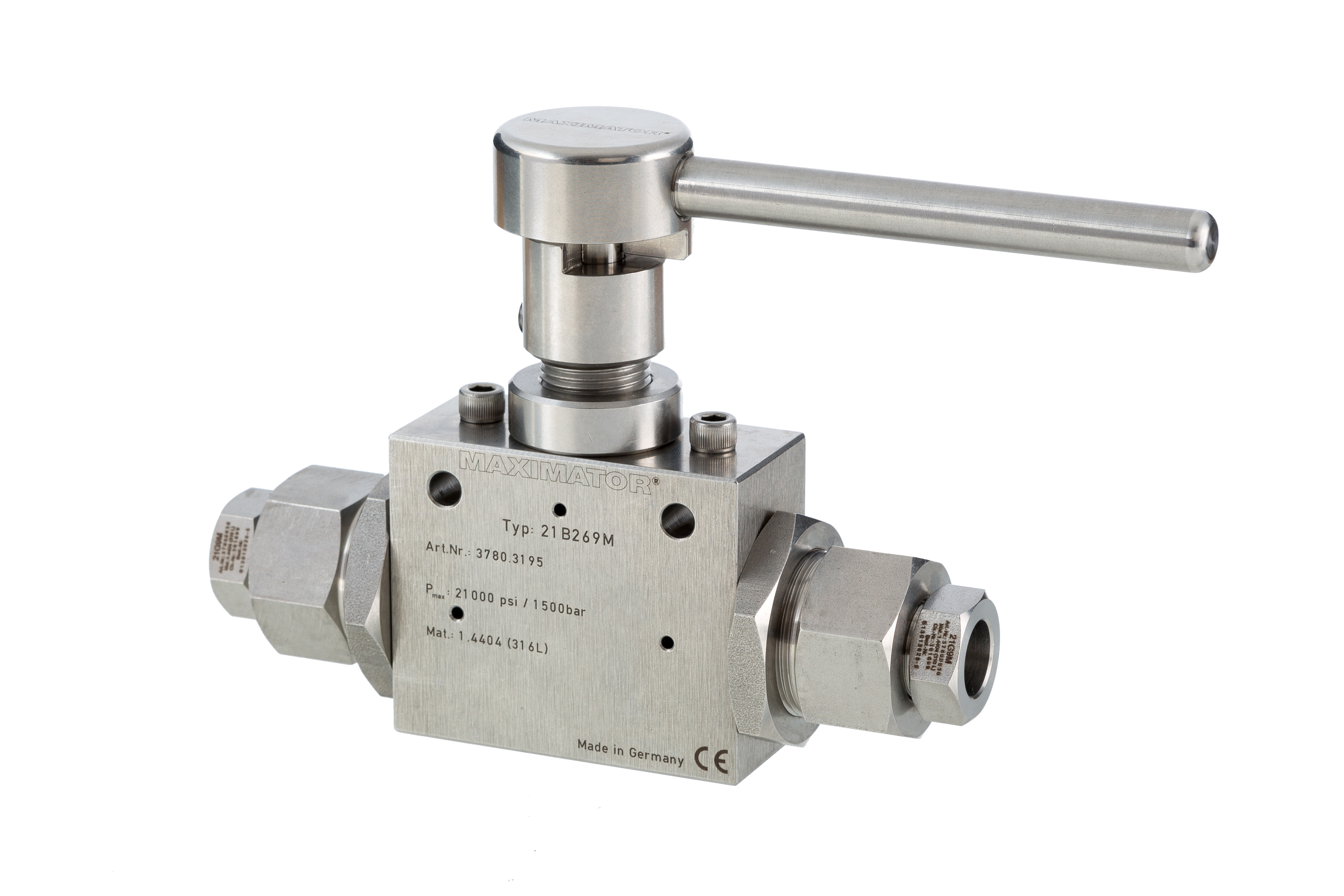
Ball Valves - Up to 22,500 psi
Quarter-turn ball valves for medium-pressure gas and liquid applications, with operating pressures up to 22,500 psi for applications commonly specified in the 20,000 psi pressure class.
-
Adapters & Couplings
Adapters and couplings are available across Maximator pressure classes from 15,200 psi to 152,000 psi, including applications commonly specified around 15,000, 20,000, 60,000, 100,000 and 150,000 psi. Options are available for connecting different sizes, pressure classes and connection types.

-
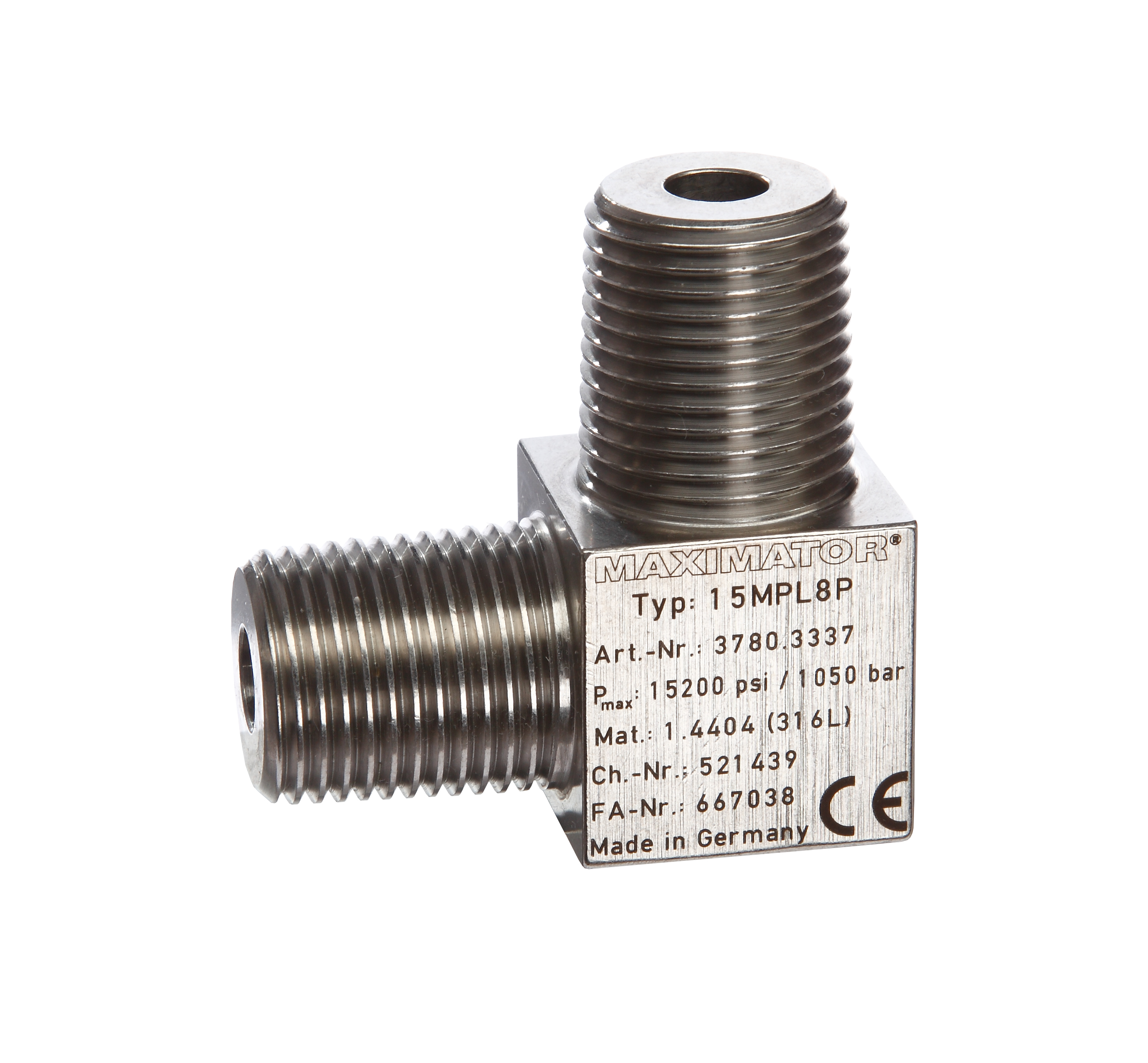
Pipe Valves, Fittings & Nipples
Pipe valves, fittings and nipples are available for pressures up to 15,200 psi, covering applications commonly specified in the 15,000 psi pressure class for demanding gas and liquid service.
-
1 ½” Valves, Fittings & Tubing
Large-bore 1-1/2" valves, fittings and tubing provide increased flow capacity for applications up to 15,200 psi.

-
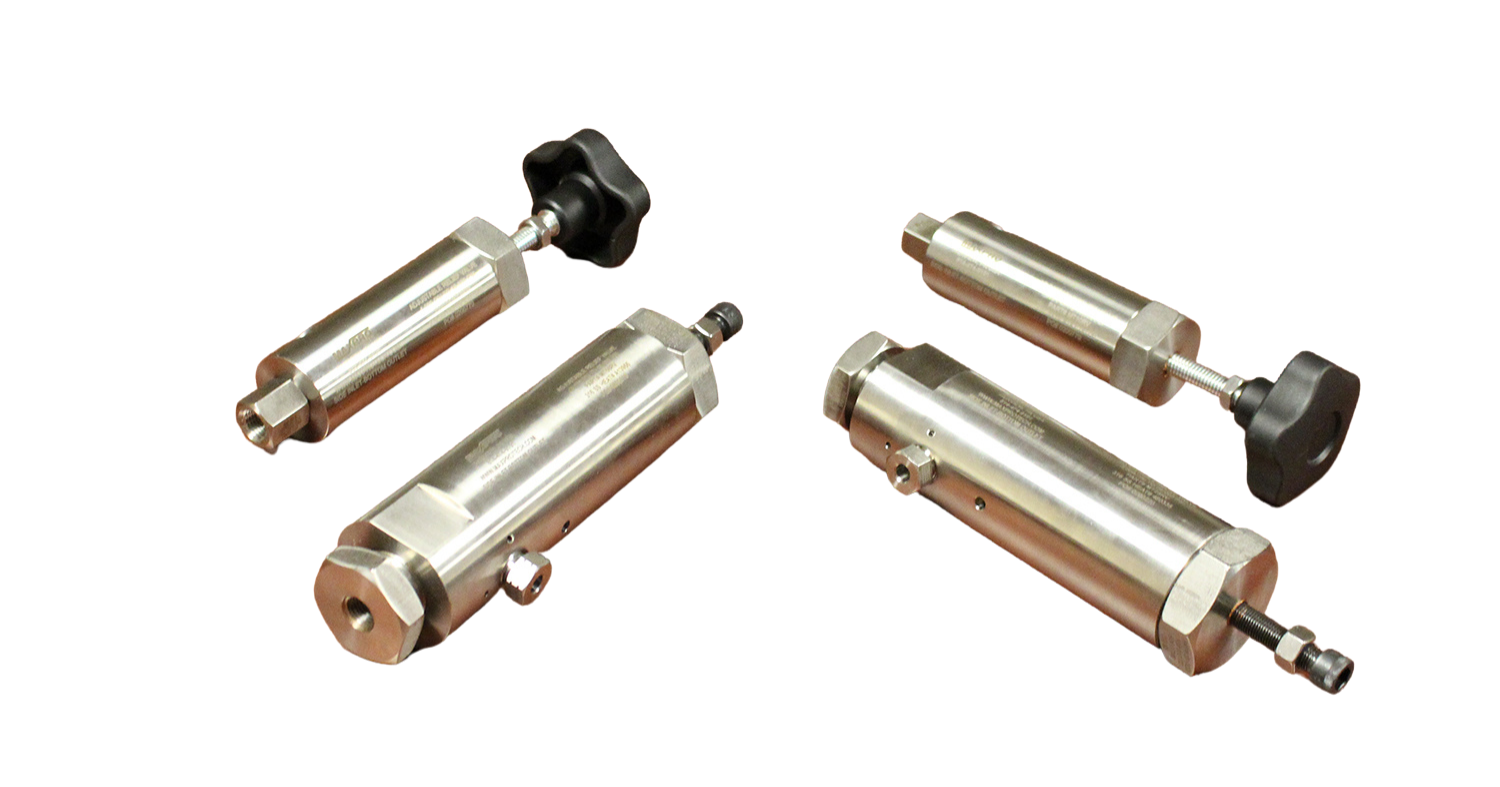
Relief Valves
Relief valves are available in 3,000 psi, 10,000 psi, 25,000 psi and 66,000 psi pressure ranges, providing reliable overpressure protection for gas and liquid systems.
INDUSTRY PROVEN ADVANTAGES
• Engineering and Production exclusively in Germany • Wide range of Products available • Short delivery times due to highly flexible manufacturing • Certificates (Declaration of manufacturer, ATEX, etc.) for all products readily available • Based on decades of experience in the field of high pressure technology, MAXIMATOR manufactures valves and fittings for the chemical industry, water-jet cutting, power systems and test bench manufacture.
Coned & Threaded High-Pressure Connections
Maximator coned and threaded fittings, valves and tubing are designed for reliable operation in demanding medium-, high- and ultra-high-pressure gas and liquid systems. The connection uses a precision-machined tube cone together with a threaded collar and gland to create a metal-to-metal seal while mechanically retaining the tubing in the fitting.
Unlike conventional compression-style connections, a coned and threaded connection is specifically designed for extreme-pressure service. Maximator offers medium pressure fittings and tubing, high pressure fittings and tubing, and ultra high-pressure fittings and tubing in multiple sizes and pressure classes for building complete high-pressure systems.
Why Use Coned & Threaded Connections?
• Designed for extreme pressure — Available for systems ranging from medium pressure through ultra-high-pressure applications
• Positive mechanical tube retention — The threaded collar mechanically captures the tubing within the connection
• Metal-to-metal sealing — The precision cone geometry creates a reliable seal without relying on an elastomer at the primary pressure connection
• Complete system capability — Valves, stainless steel high pressure tubing, fittings, nipples, adapters and related components can be supplied for a complete pressure system
• Multiple pressure classes — Components are available for applications commonly specified around 20,000 psi, 60,000 psi, 100,000 psi and 150,000 psi, with Maximator ratings extending to 22,500 psi, 65,000 psi, 101,000 psi and 152,000 psi where applicable
Types of Medium, High & Ultra-High Pressure Valves
Maximator offers a broad range of valves for controlling, isolating and protecting high-pressure gas and liquid systems. Available configurations include needle valves, check valves, ball valves, block and bleed valves, air-operated valves, relief valves, safety heads and line filters across multiple pressure classes.
Coned and Threaded Connection Frequently Asked Questions
What is a coned and threaded connection?
A coned and threaded connection is a precision tubing connection designed for reliable service at extremely high pressures.
The connection creates a metal-to-metal seal between precisely machined, dissimilar cone angles on the tubing and fitting body. The tubing is mechanically retained using a left-hand threaded collar and gland, providing resistance to tube movement and tube ejection under high-pressure conditions.
The result is a mechanically retained, metal-to-metal connection designed for applications where pressure capability, sealing integrity, and reliable tube retention are critical.
How does a coned and threaded connection work?
A coned and threaded connection creates a high-pressure metal-to-metal seal using precisely machined, intentionally dissimilar cone angles on the tubing and fitting body.
The tubing has a 59° male cone and left-hand thread, while the fitting body has a 60° female cone and mating internal thread. During assembly, tightening the gland draws the collar and tubing into the fitting, forcing the male cone against the female cone and creating a defined sealing point.
The gland generates the required preload at the sealing point, creating the sealing stress necessary to maintain the connection under internal pressure.
How do you assemble a coned and threaded connection?
Proper assembly is critical for achieving a reliable high-pressure seal.
1. Install the gland and collar
Slide the gland onto the tubing and thread the left-hand collar onto the prepared tube, leaving approximately one or two threads exposed at the coned end.
2. Lubricate the connection
Apply a compatible lubricant to the gland threads, the back of the collar where it contacts the gland, and the coned surface of the tubing. Proper lubrication helps protect the sealing surfaces from galling during assembly.
3. Insert and torque the connection
Insert the tubing into the connection and tighten the assembly hand-tight. Using a torque wrench, tighten the connection to the appropriate value specified in the Maximator torque table for the tubing size and pressure rating.
View Tools & Installation Connection Assembly Instructions
Why would you use a coned and threaded connection over a swage-type connection?
The choice between a coned and threaded and a swage-type connection depends on the pressure, temperature, media, tubing material, and operating requirements of the application.
For extreme-pressure applications, coned and threaded connections offer several advantages:
• High pressure capability — Including applications up to 152,000 psi at room temperature.
• Positive tube retention — The threaded collar and gland mechanically retain the tubing.
• Metal-to-metal sealing — The connection uses precision-machined conical sealing surfaces.
• Repeatable assembly — Specified gland torque establishes the required assembly preload.
When extreme pressure, positive tube retention, and metal-to-metal sealing are critical requirements, a Maximator coned and threaded connection is well suited for the application.
What information should I provide when specifying a high-pressure fitting?
Selecting the correct high-pressure fitting requires more than identifying the connection size. Providing the following information helps ensure the fitting and tubing are properly matched to your application:
• Operating and test pressure
• Tube OD and wall thickness
• Tubing material
• Process media
• Operating temperature
• Pressure cycling or pressure spikes
• Connection configuration and size
• Thread type and size
• Fitting material
• Applicable standards or specifications
For demanding applications, information about the operating environment, expected service life, and existing tubing or fitting specifications can also be helpful.
Providing these details allows us to recommend a connection properly matched to your system requirements.
What tubing should I use with a coned and threaded connection?
Coned and threaded connections require tubing that is properly matched to the connection size, pressure rating, and application.
When selecting tubing, consider the outside diameter, inside diameter/wall thickness, pressure rating, material, and operating conditions. The tubing must also meet the dimensional requirements necessary for proper coning and threading.
Maximator US supplies high-pressure tubing for coned and threaded applications.
View High-Pressure Tubing


